
Drone Warfare
How Colombia's armed groups use weaponized drones
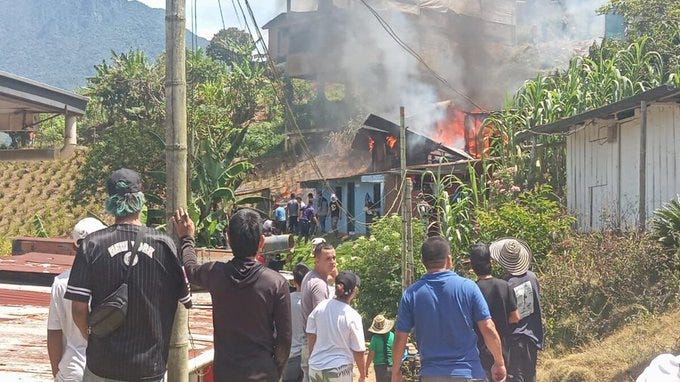
In the early morning hours of October 14th, 2025, the Calamar municipality in Guaviare became a war zone. From the sky, drones dropped explosives on the home of the municipal mayor, injuring his younger brother and killing every pet in the building. Elsewhere, drones also attacked the municipal police station and dropped explosives on a local Colombian military battalion, seriously injuring one soldier.
As drones flew over the town square, members of the battalion aimed their guns into the air and opened fire, successfully shooting one of the devices down before it could drop its payload. Once the bombs stopped falling, the soldiers then searched the area for the perpetrators, clashing with armed guerrillas by a local school near the mayor’s home. The battle took place while more than 1,000 boys and girls were attending classes, causing a panic until the gunfire subsided and the attackers fled the area.
Subsequent reporting has identified the Armando Rios FARC Front, part of Ivan Mordisco’s Central General Staff (FARC-EMC), as the group responsible for the attacks in Calamar. However, this is just one incident in a growing security crisis as Colombia’s armed groups embrace weaponized drones with frightening speed.

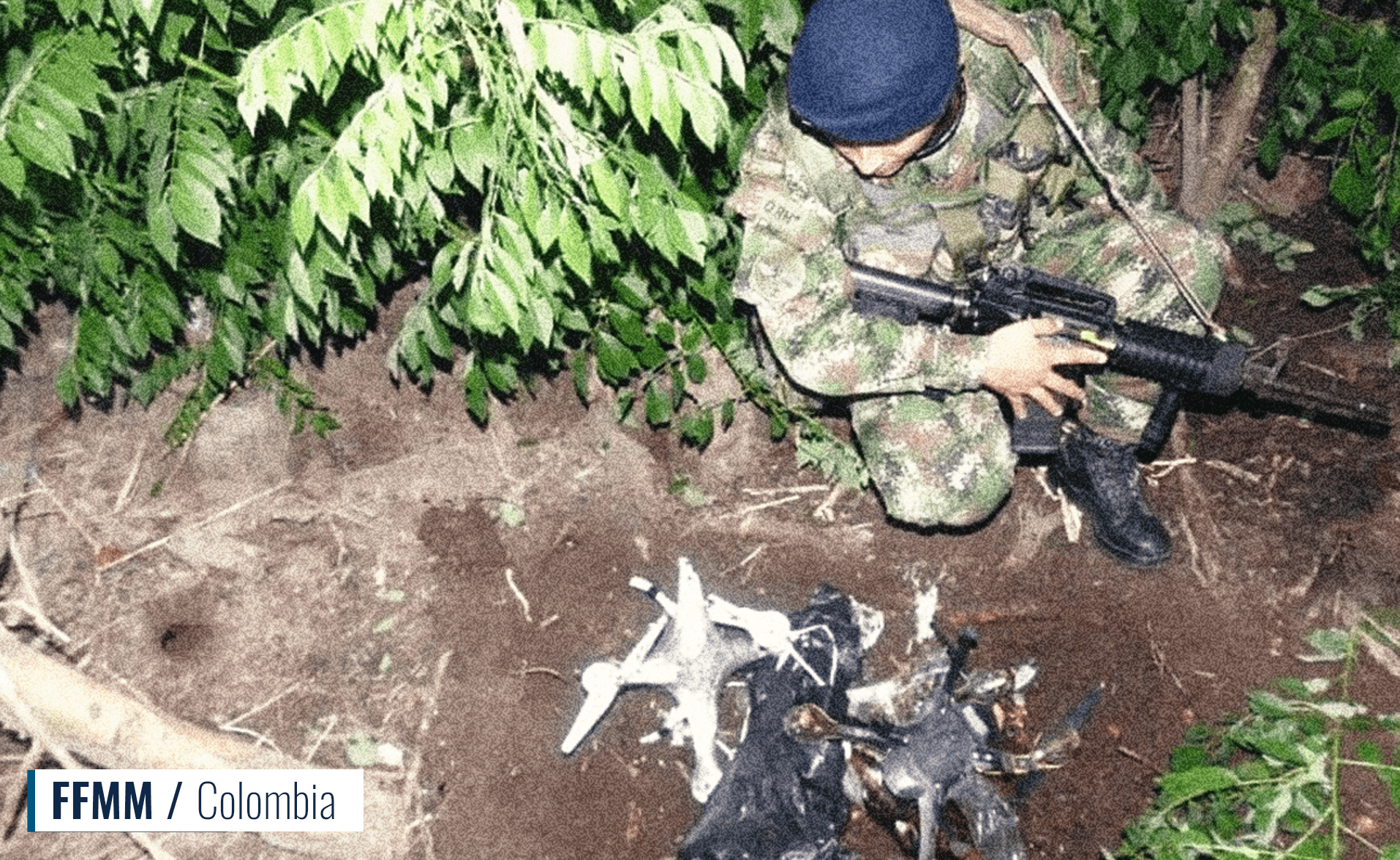
The first known instance of weaponized drones in Colombia occurred on September 19th, 2019, when the Colombian Army seized two drones equipped with 600 grams of explosives in Nariño. The drones were likely smuggled from Ecuador or Peru by the Oliver Sinisterra FARC Front to attack unknown targets in the nearby municipality of Tumaco.
These drones were relatively primitive. Investigators noted the explosive charges were attached to the drones directly, meaning they would have been destroyed when the charges detonated. However, since that time armed groups have become more skilled at modifying commercially-available drones into viable weapons, equipping them with remote-controlled “dropping kits” capable of carrying and releasing explosives on demand.
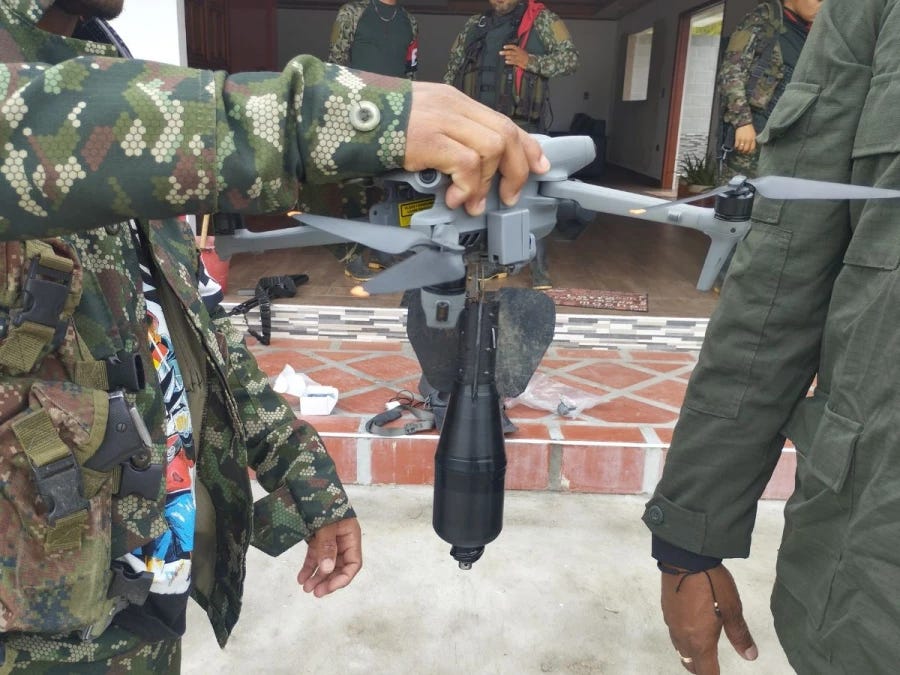
Armed groups have also become more capable and aggressive in their use of drones. On March 3rd, 2025, the ELN became the first armed group to successfully use drones to kill a Colombian soldier. The following August, FARC remnants used drones to down a police helicopter, killing 13 officers, and damage a river patrol ship. By March 2026, drone attacks were occurring somewhere in Colombia once every 1.5 days on average, often relying on swarm tactics to overwhelm local defenses, and had caused more than 480 casualties among Colombia’s security personnel.
This growing sophistication has come, in part, from the ongoing Russia-Ukraine War. In July 2025, it was revealed that Ukrainian investigators suspected members of Colombian armed groups had secretly served in drone operator units in the Ukrainian International Legion to gain training and experience. It’s likely not a coincidence that the ELN later attempted to use fiber-optic drones, similar to those used by Ukraine in Russia’s Kursk Oblast, to bypass a Colombian military base’s electronic anti-drone defenses in February 2026.
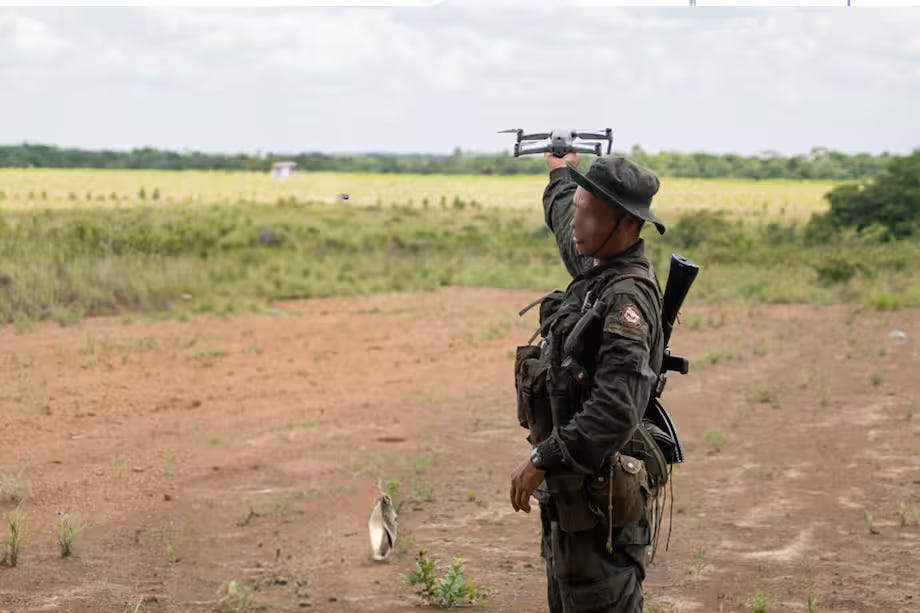
Thus far, the Colombian government has struggled to respond to this proliferation of armed drones. In January 2026, it announced the creation of the National Anti-Drone Shield project, but this has yet to have any notable impact on the frequency or effectiveness of armed groups’ drone operations.
In March 2026, for the first time since 2013, Colombia was once again listed among the top 10 countries most impacted by terrorism in the Global Terrorism Index. Until effective countermeasures can be found and efficiently distributed to Colombia’s security personnel, and further drone innovations by armed groups are consistently anticipated, the situation will remain dire both for Colombia and the surrounding region.

Next week, Armed Groups of Colombia will explore how an armed group that broke away from the ELN continues to operate today in spite of its alleged disarmament.
If you find Armed Groups of Colombia valuable, consider sending a donation to support my work. The amount is up to you. Thank you!