
Invading Ecuador
How FARC remnants operate in the Land of the Equator
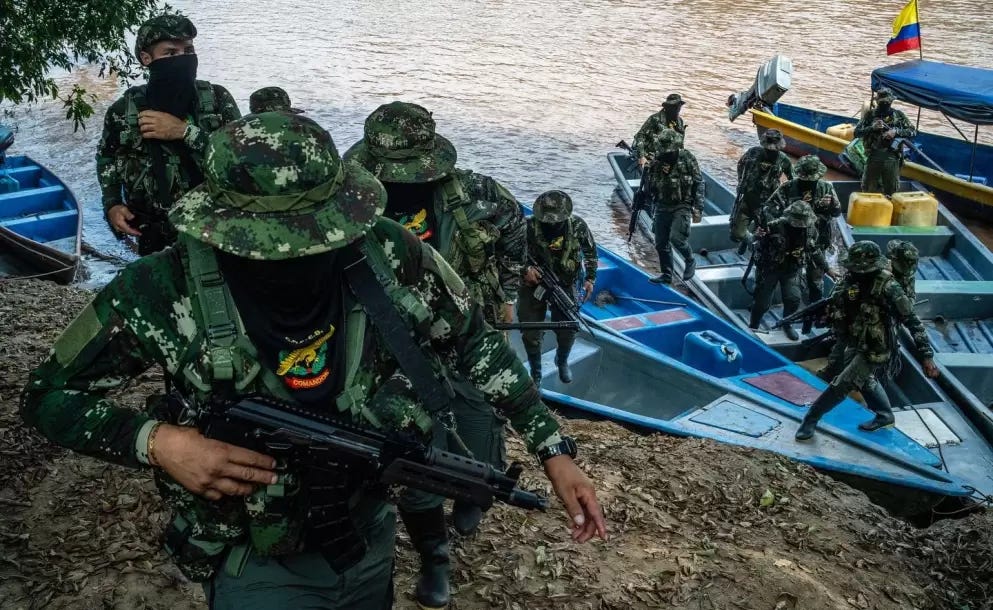
In May 2025, Ecuadorian military forces were deployed into the country’s Amazonian region to dismantle illegal mines. As part of this operation, four combat teams of 80 soldiers travelled by helicopter into the Alto Punino zone, approximately 40-miles from the Colombian border. Upon discovering a possible illegal mine hidden in the area’s remote rainforest, one of the combat teams disembarked and approached the site, intending to destroy the heavy equipment there. However, before they could do so, the soldiers were ambushed by armed men who opened fire with rifles and explosives, leaving 11 Ecuadorian soldiers dead. Later, in October 2025, allegedly in retaliation for anti-mining operations, the same armed group participated in a series of attacks throughout Ecuador, using explosives to damage two bridges and detonating a car-bomb in a mall in Quito.
What makes these events noteworthy in the context of Ecuador’s ongoing violent upheaval is that the perpetrators were not members of Ecuadorian gangs, but the Colombian FARC front known as the Border Commandos (CDF). The CDF, affiliated with the Bolivarian National Army Coordinator (FARC-CNEB), is also not the only FARC group present in Ecuador, as both the Carolina Ramirez front, affiliated with the Central General Staff (FARC-EMC), and Oliver Sinisterra front, affiliated with the Second Marquetalia (FARC-SM), were also active in the country since 2025.

On March 6th, 2026, the Ecuadorian government announced that it had carried out a joint airstrike with the United States against a CDF training camp near the Colombian border. As reported by the Global Guardian, the strike will likely serve as a “proof of concept” for other joint US military operations against transnational criminal groups. However, there’s reason to suspect that US military muscle will not be enough to dislodge the FARC from Ecuador.
Ecuador’s government declared a state of “internal armed conflict” in January 2024, and targeted local gangs, which it designated terrorist organizations, with military force. However, after two years of intense crackdowns, murder rates in Ecuador continue to climb, reaching a record high in 2025. FARC groups are enmeshed within this criminal landscape and leverage close ties with Ecuador’s gangs to traffic cocaine and launch violent attacks.
The FARC also has a history of leveraging Ecuador’s poorly monitored northern border to operate with near impunity. In December 2012, an InSight Crime investigation found that FARC guerrillas in Ecuador wore civilian clothing and used “Ho Chi Minh trail-style supply routes” to hide their presence. Today, the Colombia-Ecuador border remains poorly regulated, and FARC groups stand to benefit from an ongoing trade war raising demand for smuggled goods.
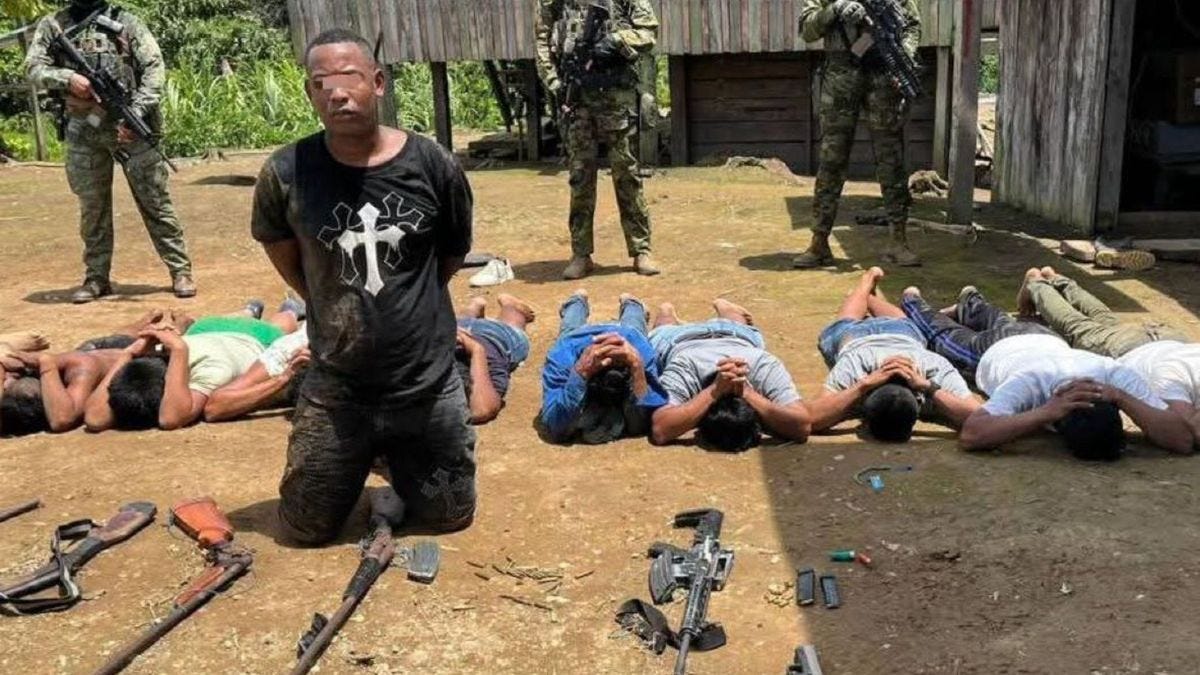
Additionally, there are signs the FARC’s presence in Ecuador is growing more entrenched. On February 17th, after a brief armed clash, Ecuadorian authorities captured the Colombian leader of the Cristian Guerrero front, a group affiliated with FARC-SM. Alongside him, authorities also arrested 10 Ecuadorians, indicating the FARC recruited them from the local population. Perhaps more worryingly, there does not appear to be any mention of the Cristian Guerrero front outside of Ecuador, meaning FARC groups may be establishing new local fronts.
So long as these variables remain unaddressed, FARC remnants will remain active in Ecuador, simply adapting in the face of US and Ecuadorian military pressure. Treat any announcements of progress against FARC groups from Ecuador’s government with skepticism, as its claims have proven unreliable in the past.

Next week, Armed Groups of Colombia will explore how Colombia’s largest criminal group uses narco-subs to traffic cocaine through the Caribbean Sea.
If you find Armed Groups of Colombia valuable, consider sending a donation to support my work. The amount is up to you. Thank you!